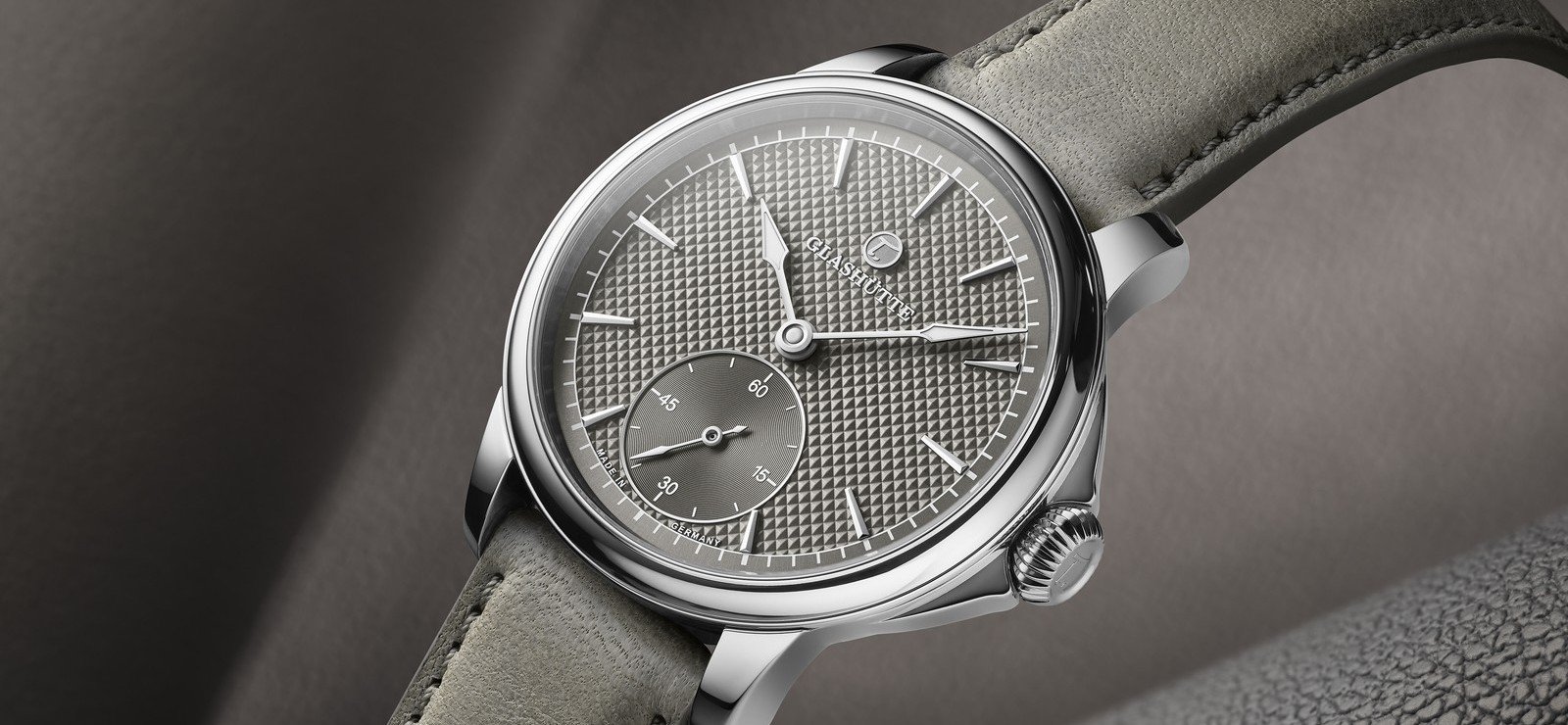
Tutima
Founded in 1927 in Glashütte by Dr. Ernst Kurtz — a jurist who recognised that the future belonged to the wristwatch, not the pocket watch. He united the lone wolf watchmakers scattered across the Müglitz valley under two companies: UROFA and UFAG. Their watches were so reliable and durable they were named 'Tutima', from the Latin for 'safe, secure.' The 1941 pilot's watch became legendary. Four years later, an air raid hours before the war's end destroyed the factory; Russian troops occupied the state. Undaunted, Dr. Kurtz and key employees moved west, preserving Glashütte's ideals — technical finesse, spirit of innovation, and knowledge of their roots — in Ganderkesee, Lower Saxony.
In 1984 the Tutima Military Chronograph ref. 798 was voted the official pilot's watch of NATO. In 2008, a new factory opened in Glashütte's former rail station maintenance depot, returning the brand to its birthplace. In 2011, Tutima presented the HOMMAGE — the first minute repeater completely developed and produced in Glashütte — a respectful bow to founder Dr. Kurtz, ringing in a new era of acoustic time signals. In 2013 four new watch families debuted — the Saxon One, Grand Flieger, M2, and Patria — the first Tutima collection in 68 years created in Glashütte.
The in-house calibre 617 features 166 components of the highest quality, produced on CNC machines and traditionally finished by hand; its spring barrel, gear train, and oscillating system are also used in the minute repeater. The proprietary chronograph calibre Tutima 521 (patent pending) is built on a modified ETA Valjoux 7750 base, replacing the Lémania 5100. Two to three years of development per watch. 'Where the exceptional is tradition — and tradition is exceptional.'