Daisuke Oguri
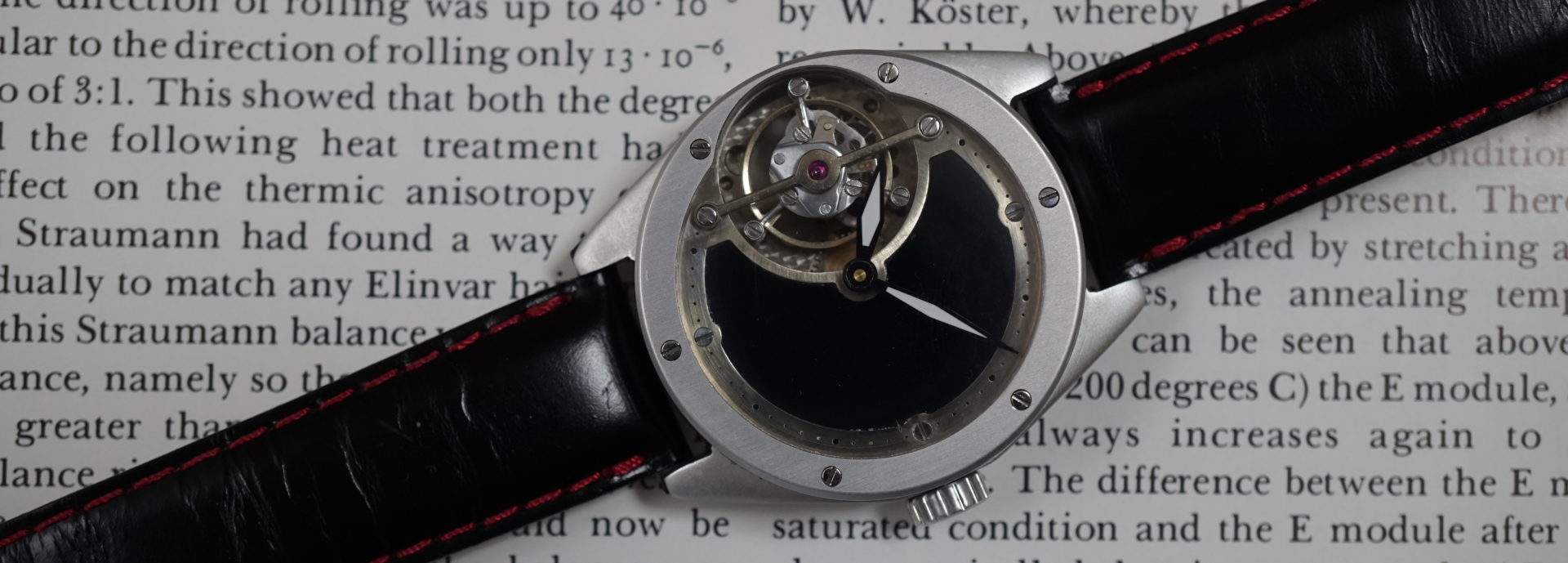
Daisuke Oguri is proof that the internet has quietly dismantled watchmaking's oldest barrier to entry — a self-taught, entirely part-time Japanese watchmaker in Osaka who builds his own tourbillons at home, in his spare hours, with a CNC machine that fits inside his closet. Born in 1973, Oguri fell for watches as a teenager, drawn in by vintage chronographs and Rolexes glimpsed in fashion magazines in the pre-internet years. He kept a day job — he remains a full-time systems engineer, a skilled computer programmer by trade — and came to serious watchmaking only in 2017, after years of repairing watches as a hobby. His real teachers were the internet and two towering figures of Japanese independent horology: a Japanese television documentary on Philippe Dufour that influenced a generation of Japanese enthusiasts, and above all Hajime Asaoka, whose own CNC-built tourbillon Oguri discovered on Facebook and resolved to attempt himself. As he tells it, the hurdle to making watches has dropped dramatically — free CAD and CAM software, a CNC milling machine for about 100,000 yen, tools and materials ordered from Amazon — and what once took a manufacture's resources can now, with enough obsession, be attempted alone in a spare room.
His first tourbillon, completed in 2018 after a full year of mostly self-directed trial and error, was a flying tourbillon riding on ball bearings; the carriage had play and would occasionally stop, so four months later he completed a second, bridge-mounted tourbillon that actually kept time reliably — though, ever the perfectionist, he still isn't satisfied with its thickness or finish and hopes to revisit the form. He makes every exterior part of his watches himself — cases, dials, hands, crowns — and machines his own movement bridges and plates, though by his own honest account he hasn't yet attempted balance wheels or gears from scratch, working instead from vintage donor calibers. The OG02 paired a stepped bezel and Art Deco sector dial — inspired by vintage Longines — with a vintage Audemars Piguet K2001 movement, obtainable cheaply in the years before collectors caught on to stripped gold AP calibers. The OG03 built on a Unitas 6498, fitted with an Oguri-made bridge, blued screws, and a decorated ratchet wheel. His next project, the OG04, scales a Unitas 6497-derived movement down to a more wearable 32.5mm — a prototype already running, priced around $7,000.
Working alone and part-time — by his own estimate, around six hours a week — caps his output at roughly ten watches a year, and demand already exceeds it: when he released the OG03, forty people wanted one and he could make only ten, turning away thirty orders rather than compromise on scale. Most of his clients are now in Japan, in part because after-sales service and warranty support for watches shipped abroad add real complexity for a one-man operation. Oguri has said he'd like to devote himself to watchmaking full-time within about a decade, once his skills reach the level he wants — for now, he remains one of independent watchmaking's most compelling case studies: an engineer by day whose closet holds a CNC machine, and whose small, obsessively made tourbillons prove that the walls around haute horlogerie's most guarded complications are far more permeable than the industry likes to admit.